
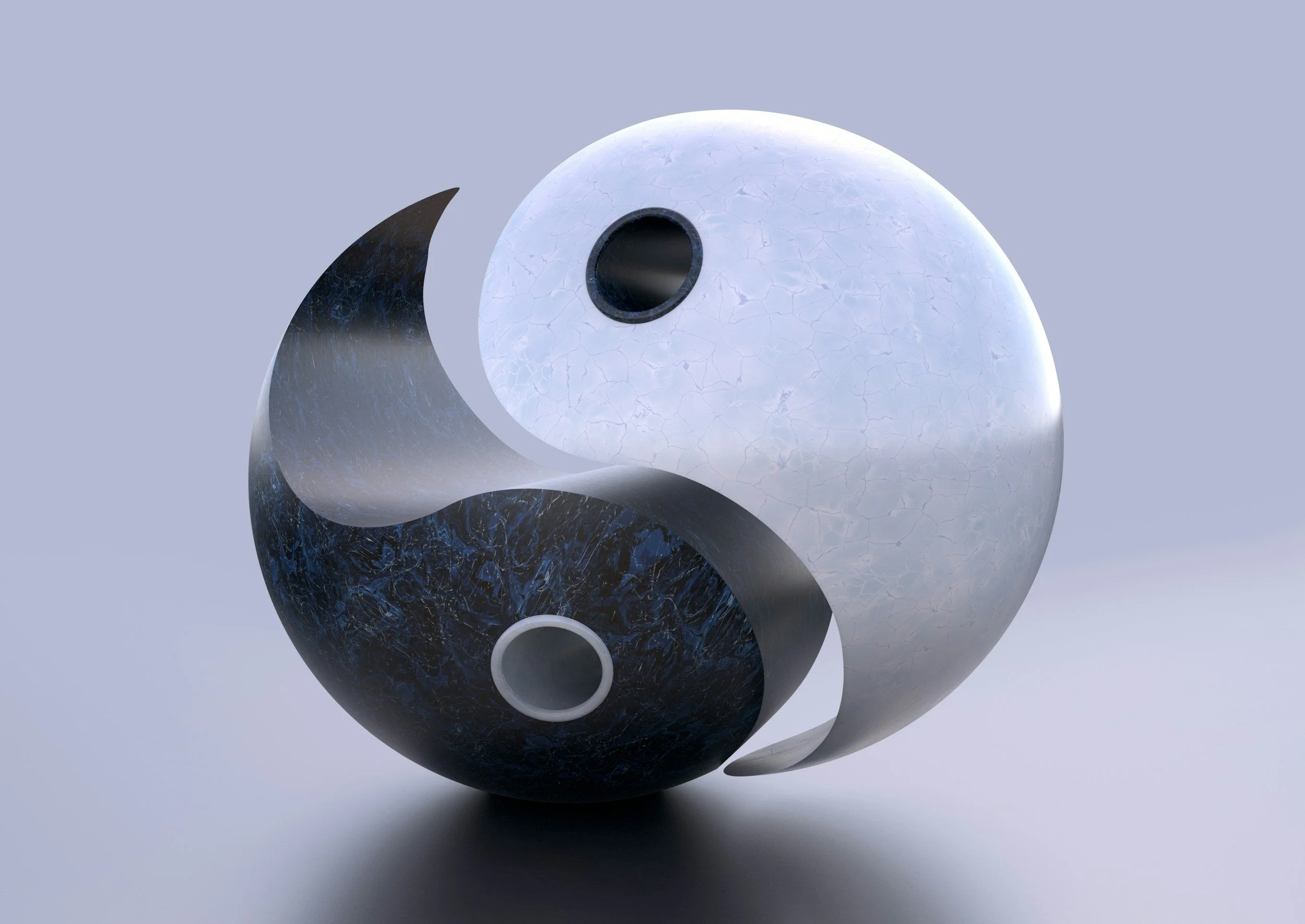
Are Ying and Yang pairings the key to strong, healthy, and lasting relationships? I believe so, but let’s talk about it. The yin and yang concept originates from ancient Chinese cosmology, which emphasizes harmony, showing that all things exist in a continuous state of change and balance. Yin and yang represent the Taoist philosophy that seemingly opposite forces, such as light and dark, active and passive, or hot and cold, are actually interconnected, interdependent, and complementary in the natural world.
Yin
Yin represents the dark side, femininity, passivity, cold, rest, and the shady side of the mountain. The yin is soft and thoughtful, but also a thinker with an abundance of introspection.
Yang
Yang represents the white side, masculinity, activity, heat, assertion, and the sunny side of the mountain. The yang is about action.
A yin and yang pairing doesn’t mean complete opposites and incompatibility. In fact, the yin and yang pairings provide balance for one another and add a certain amount of interdependence.
The Benefits of Yin and Yang Relationships
Healthy relationships require many things, including good communication, friendship, mutual respect, trust, honesty, and a strong desire to make the relationship work. Healthy relationships also require balance.
Have you ever had a yin and yang type of relationship, where everything felt perfectly balanced?
Let's explore some of the benefits of yin and yang romantic relationships.
1. You Complement Each Other's Strengths and Weaknesses
One of the greatest benefits of a yin and yang relationship is that you and your partner can complement one another's strengths and weaknesses.
For example, let's say you're naturally outgoing, adventurous, and spontaneous. You enjoy trying new things, meeting new people, and taking chances. Your partner, on the other hand, is more reserved, thoughtful, and cautious. They prefer to consider their options before making decisions.
At first glance, these differences might seem like a recipe for conflict. However, when both partners appreciate and respect what the other brings to the relationship, those differences can become strengths.
Your outgoing personality might encourage your partner to step outside their comfort zone and experience new things. Meanwhile, their thoughtful nature might help you slow down, consider the consequences of your decisions, and make more informed choices.
You help one another grow without needing to change who you are fundamentally.
Of course, this only works when both people are willing to appreciate each other's contributions. If one partner constantly criticizes the other for being too outgoing or too cautious, those same differences can become a source of frustration.
The goal isn't to make your partner more like you. It's to recognize that you can approach life differently and still be an excellent team.

2. You Create a Natural Balance in the Relationship
Balance is an important part of any healthy relationship. Sometimes, one partner is better at taking the lead, while the other is more comfortable offering support. One might be more emotionally expressive, while the other tends to process feelings internally before discussing them.
These differences can create balance when both partners feel heard, valued, and respected.
Imagine a couple facing a difficult decision. One partner immediately wants to take action, while the other prefers to pause and think things through. Rather than allowing their different approaches to create tension, they learn to combine them.
The action-oriented partner helps prevent the couple from becoming stuck in indecision, while the more reflective partner ensures they don't rush into something without considering the consequences.
Together, they can make better decisions than either might make alone.
This is one of the beautiful things about complementary relationships: you don't always have to approach a situation in the same way to arrive at a solution that works for both of you.
However, balance doesn't mean one person should always lead while the other follows. Healthy relationships allow both partners to take the lead in different situations, depending on their strengths, needs, and circumstances.
3. You Learn From Each Other
A healthy romantic relationship should provide opportunities for personal growth. When two people bring different perspectives, experiences, and personalities to the relationship, they have opportunities to learn from one another.
Perhaps you're naturally optimistic and tend to see the possibilities in every situation. Your partner may be more realistic and inclined to consider the potential challenges. You might help them recognize opportunities they would otherwise overlook, while they help you prepare for obstacles and create a practical plan.
Or perhaps you're the emotionally expressive partner who finds it easy to talk about feelings, while your partner needs more time to understand and articulate their emotions. With patience and mutual respect, you can learn from each other's communication styles.
The important thing is that learning goes both ways.
A yin and yang relationship shouldn't be about one person being the teacher and the other being the student. Both partners have something valuable to offer, and both should feel encouraged to grow.
Sometimes, the person who challenges your perspective is also the person who helps you become a better version of yourself.
4. You Appreciate Each Other's Differences
Have you ever noticed how easy it is to become frustrated with someone who approaches life differently from you?
Maybe you like to plan everything in advance, while your partner prefers to go with the flow. Perhaps you're comfortable expressing affection openly, while your partner demonstrates love through quiet, thoughtful gestures.
It's easy to interpret these differences as signs that you're incompatible. But sometimes, the problem isn't the difference itself. It's the meaning we attach to it.
You might interpret your partner's need for quiet as a lack of interest, when they simply need time to recharge. Your partner might interpret your desire to talk through a problem as overthinking, when you're trying to feel connected and understood.
When you learn to understand one another's perspectives, you can begin to appreciate your differences instead of constantly fighting against them.
This doesn't mean ignoring legitimate concerns or making excuses for behavior that hurts you. It means learning to distinguish between a genuine incompatibility and a difference in personality, preferences, or communication style.
You don't have to love everything your partner loves or approach every situation the way they do. Sometimes, loving someone means appreciating the things that make them different from you.
5. You Can Develop Stronger Communication Skills
You might assume that couples who are alike communicate more easily than couples with different personalities. While shared communication styles can certainly help, differences can also encourage partners to become more intentional about how they communicate.
For example, one partner might prefer to address disagreements immediately, while the other needs time to process their thoughts before talking. Without understanding, this difference can lead to frustration. One person feels ignored, while the other feels pressured.
But when both partners understand their needs and communicate them clearly, they can develop a healthier approach.
The partner who needs time to process can explain that they aren't avoiding the conversation and agree to return to it later. The partner who wants to resolve the issue can learn to give them space without assuming the worst.
The result is a communication style that respects both partners.
Of course, healthy communication requires effort from both people. One partner shouldn't have to suppress their needs indefinitely to accommodate the other. Likewise, needing time to process emotions shouldn't become an excuse to avoid difficult conversations altogether.
The goal is to find a way to communicate that works for both of you.
6. You Create a Relationship That Feels Like a Partnership
A strong romantic relationship isn't about two people competing to see who is right, who is more capable, or who has the most control. It's about two people working together toward a shared life.
Yin and yang relationships can encourage this sense of partnership because each person learns to recognize the value the other brings.
Maybe you're excellent at managing the details of everyday life, while your partner is better at seeing the bigger picture. Perhaps you're the one who keeps everyone connected, while your partner is the person who remains calm when life becomes stressful.
Rather than competing over who does things better, you learn to appreciate how your individual contributions support the relationship.
This doesn't mean keeping score or assigning permanent roles based on gender. A genuine partnership allows responsibilities to shift as circumstances change. Both partners should be willing to contribute, compromise, and support one another.
The most successful couples understand that they don't have to do everything the same way. They simply have to be willing to work together.
7. You Can Build a Deeper Sense of Intimacy
Intimacy involves more than physical attraction. It also includes emotional closeness, vulnerability, trust, and the feeling that you can be yourself with another person.
When two people complement each other, they may create an environment in which both feel comfortable expressing different sides of themselves.
Perhaps one partner helps the other feel safe enough to be vulnerable, while the other encourages them to embrace new experiences. One might bring a sense of calm during stressful moments, while the other brings warmth, humor, and spontaneity into everyday life.
Over time, these experiences can strengthen the emotional bond between them.
The key is that both partners must feel accepted. Your differences should help you feel more understood, not less valued. You should be able to express your needs, share your feelings, and disagree without fearing rejection or punishment.
When you feel safe being yourself with someone, intimacy has room to grow.
8. You Discover That Love Doesn't Require You to Be Identical
One of the biggest misconceptions about romantic compatibility is that two people must have the same personality to build a lasting relationship.
In reality, couples can have very different temperaments and still share the values that matter most. You might have different hobbies, social preferences, or approaches to everyday decisions, yet agree on honesty, commitment, family, and the kind of future you want to build.
Those shared foundations can be far more important than having identical personalities.
You can be the quiet one while your partner is the life of the party. You can be the dreamer while your partner is the planner. You can approach a problem emotionally while your partner approaches it analytically.
What matters is whether you respect one another, communicate effectively, and work toward a relationship that meets both of your needs.
Love doesn't require you to become the same person. It requires you to learn how to build a life together while allowing each person to remain an individual.
Are Yin and Yang Relationships Always Successful?

As appealing as the idea of yin and yang relationships may be, complementary differences don't automatically create a healthy or lasting relationship.
You can have two people with very different personalities who bring out the best in one another. You can also have two people whose differences create constant tension, resentment, and misunderstanding.
For example, an assertive partner and a passive partner might appear to complement each other. However, if the assertive partner makes every decision and the passive partner never feels comfortable expressing an opinion, the relationship is not balanced.
Likewise, a partner who is naturally nurturing shouldn't be expected to take responsibility for all the emotional work in the relationship. And a partner who is more practical shouldn't be expected to solve every problem.
Complementary differences are beneficial only when both people have a voice, their needs matter, and the relationship allows them to grow.
It's also important to recognize that yin and yang are not fixed labels. A person can be assertive in one situation and reflective in another. You might be the more adventurous partner in your relationship while your partner is the more emotionally expressive one.
The balance between you can change as you navigate different experiences and stages of life.
Ultimately, the goal isn't to find someone who fits perfectly into an opposite role. It's to find someone whose values, character, and approach to love allow you to build a healthy relationship together.
Final Thoughts on the Benefits of Yin and Yang Romantic Relationships
I believe there's something beautiful about two people who complement each other. There's something special about being with someone who brings out the best in you, challenges you to grow, and offers a perspective that you might not have considered on your own.
You don't have to be identical to have a strong connection. In fact, your differences may become some of the things you appreciate most about one another.
But balance is about more than personality differences. It's about giving and receiving love, supporting each other's goals, sharing responsibilities, and making sure both people feel valued.
The best relationships aren't necessarily those in which two people are exactly alike or complete opposites. They're the relationships in which two people learn how to appreciate their differences while building a strong foundation of trust, respect, friendship, and mutual commitment.
So, are yin and yang pairings the key to strong, healthy, and lasting relationships? I believe complementary qualities can certainly help, but the real key is how two people treat one another and what they're willing to contribute to the relationship.
What do you think? Are you the yin or the yang in your relationship? Do you believe opposites attract and that differences can help create a stronger romantic connection? Share your thoughts in the comments below!
"He was the yin to my yang. He's all sky, vast and bright and soaring, and I'm all earth. I'm here to ground him, and he's here to help me fly." - Unknown
